
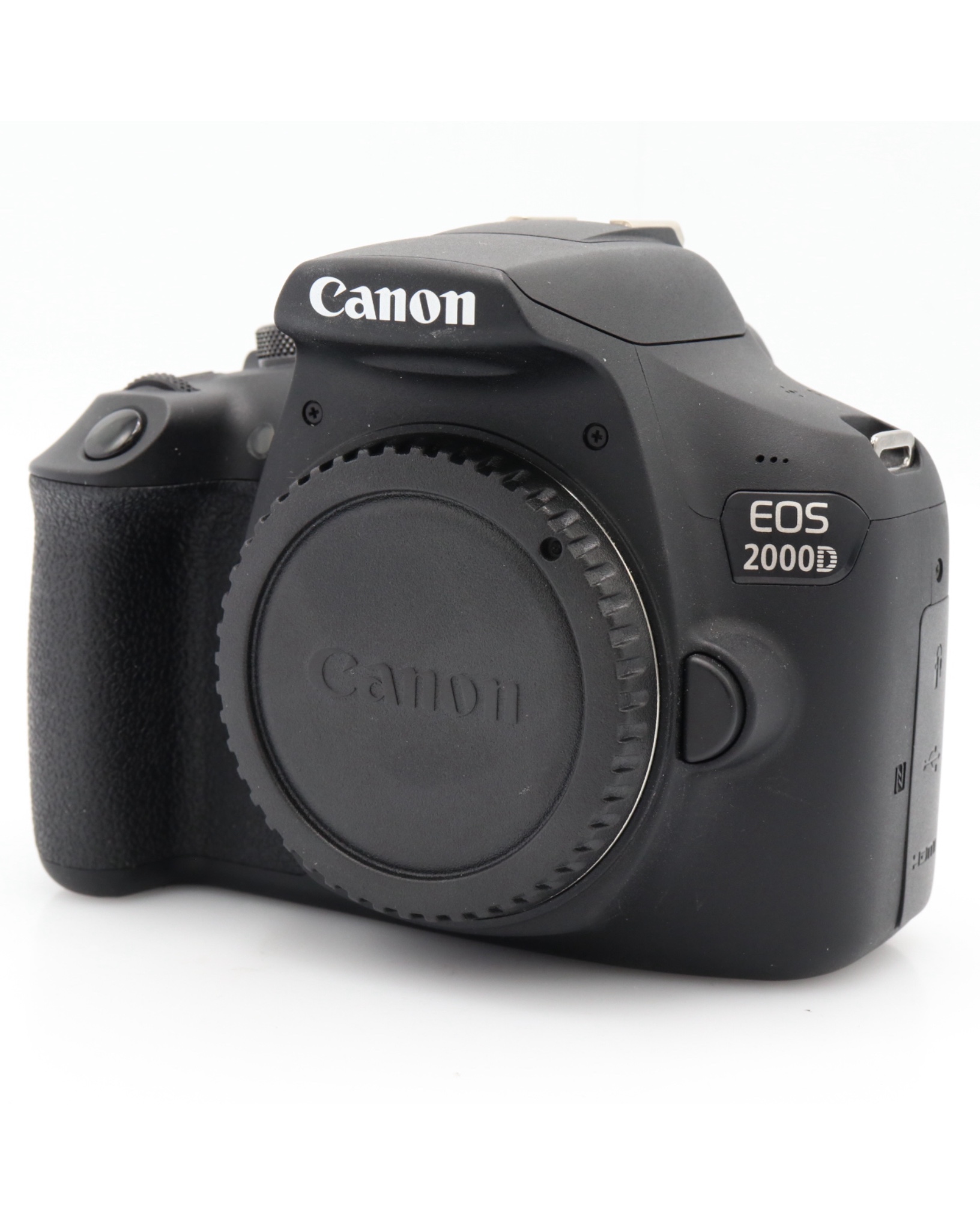


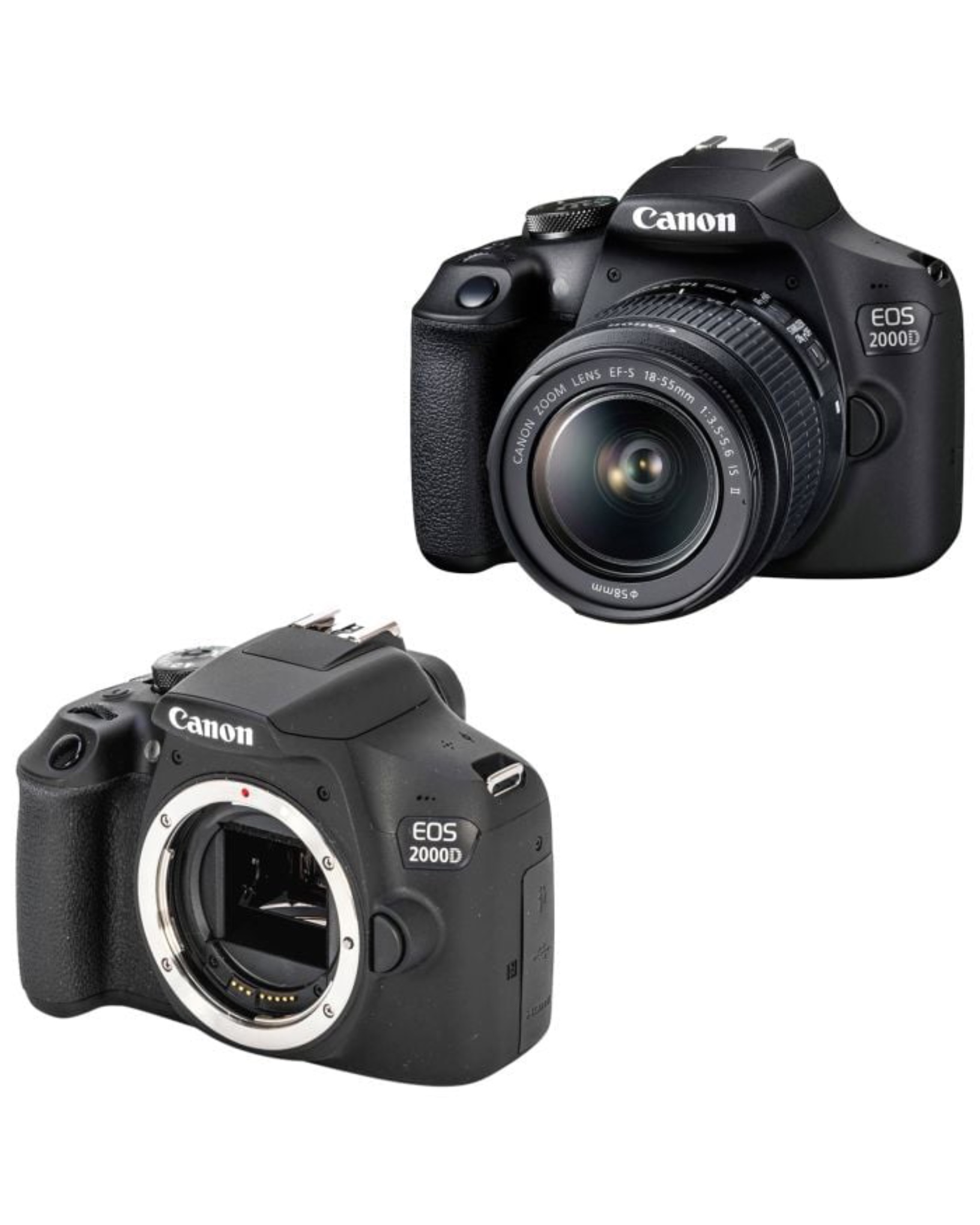
Canon EOS 2000D DSLR Camera
The Canon EOS 2000D / Rebel T7 is an excellent starter DSLR for learning photography fundamentals. It delivers sharp, detailed images with the 24.1 MP sensor, easy-to-use modes, and wireless sharing capabilities. It pairs well with Canon’s extensive EF/EF-S lens lineup (e.g., EF-S 18-55mm IS II kit lens) and remains a budget-friendly option for family photos, travel, and casual shooting.
- Delivered Today. (Order Mon-Sat before 12:00pm, delivery before 6:00pm within Lagos)
- Free Store Pick up Available.
- 7 Days Free Returns.
- 24/7 Live Customer Support
Description
The Canon EOS 2000D (known as the Rebel T7 in the Americas, Kiss X90 in Japan, and 1500D in some Southeast Asian markets). It is an entry-level APS-C DSLR released in February 2018, designed primarily for beginners and hobbyists transitioning from smartphones or compact cameras. It offers solid still image quality with a higher-resolution sensor than its predecessor (the 1300D/T6), while keeping the body simple, lightweight, and affordable.
Key Highlights
• 24.1 MP APS-C CMOS sensor for detailed stills with good color reproduction and cropping flexibility.
• Scene Intelligent Auto mode for effortless point-and-shoot operation.
• Optical viewfinder with a basic 9-point AF system — reliable for beginners.
• Built-in Wi-Fi + NFC for easy image transfer and remote control via the Canon Camera Connect app.
• Full HD 1080p video at up to 30 fps (basic capabilities).
• Creative Filters for in-camera artistic effects.
• Lightweight and compact design — ideal for travel and everyday learning.
Sensor and Image Processor
• Sensor: 24.1 MP effective (approx. 24.7 MP total) APS-C CMOS (22.3 × 14.9 mm, 1.6x crop factor).
• Processor: DIGIC 4+.
• ISO range: 100–6400 native (expandable to H: 12800).
• File formats: JPEG, 14-bit RAW, RAW + JPEG.
• Dynamic range and color: Good for its class, with vibrant Canon color science and usable results up to ISO 3200–6400 in many conditions.
Still Photography Performance
• Continuous shooting: Up to 3 fps (max burst: approx. 150 JPEGs or 11 RAW files).
• Autofocus (viewfinder): 9-point phase-detection AF system (1 cross-type center point; extra sensitivity at f/2.8 or faster on some lenses). Working range: EV 0–18.
• Autofocus (Live View): Contrast-detection only (slower than modern hybrid systems).
• Metering: 63-zone TTL metering with evaluative, partial, and center-weighted options.
• Shutter speed: 30 s to 1/4000 s; flash sync at 1/200 s.
• Viewfinder: Optical pentamirror with approx. 95% coverage and 0.80x magnification.
• Other features: Guided interface for beginners, Picture Styles, Auto Lighting Optimizer, peripheral illumination correction, and in-camera RAW processing.
Video Recording
• Max resolutions: Full HD 1080p at 24/25/30 fps; 720p at 50/60 fps; VGA available.
• Format: MOV (H.264) with mono built-in microphone.
• Video features: Basic manual exposure in Movie mode; no continuous AF tracking like Dual Pixel systems; no headphone jack or advanced audio options.
HDMI output for external monitoring.
• Limitations: No 4K; video AF is contrast-based and relatively slow.
Design and Ergonomics
• Body type: Compact entry-level DSLR with polycarbonate construction (not weather-sealed).
• Dimensions: Approx. 129.0 × 101.3 × 77.6 mm (W × H × D).
• Weight: Approx. 475 g (with battery and memory card) / ~436 g body only.
• LCD: 3.0-inch fixed TFT color screen, approx. 920,000 dots (no touchscreen or vari-angle).
• Controls: Simple layout with mode dial, Quick Control screen, and dedicated buttons for beginners.
• Media: Single SD/SDHC/SDXC card slot (UHS-I compatible).
• Flash: Built-in pop-up flash (Guide Number ~9.2 at ISO 100); hot shoe for external Canon Speedlites with E-TTL II.
• Connectivity: Wi-Fi and NFC (for wireless transfer/remote); USB 2.0; HDMI mini; no Bluetooth in early models (improved via firmware).
Power and Battery Life
• Battery: LP-E10 rechargeable Li-ion (CIPA rating: approx. 500 shots at 23°C with 50% AE/50% flash use).
• No official battery grip support.
Limitations (particularly evident in 2026):
• Slow 3 fps burst rate and small buffer.
• Basic 9-point AF (limited tracking for action or sports).
• Fixed non-touch LCD and slow contrast AF in Live View/video.
• No in-body stabilization (relies on IS lenses).
• Dated video specs (1080p/30p max, no advanced features).
• Plastic build with no weather sealing.
Firmware: Latest version is 1.2.1 (released around 2023–2024), which improves operational stability (especially for continuous commercial use). Earlier updates added NFC compatibility for Android 10+ devices. Check Canon’s official support site for your region to download the latest firmware. It still produces very good image quality for beginners and casual users, though modern entry-level mirrorless cameras (like the Canon EOS R50 or Rebel SL3/250D) offer far superior autofocus, video, and usability.
Related products
Canon EOS 1500D DSLR Camera
Original price was: ₦760,000.00.₦740,000.00Current price is: ₦740,000.00.
Panasonic DMC-GH5 Hybrid Camera Brand New
Original price was: ₦1,650,000.00.₦1,600,000.00Current price is: ₦1,600,000.00.
DJI Flip Drone ( Fly More Combo ) Brand New
Original price was: ₦1,690,000.00.₦1,660,000.00Current price is: ₦1,660,000.00.

Reviews
There are no reviews yet.